Martial arts student retention: following up on missed classes
Martial arts student retention starts with a reliable attendance record and a conversation when someone’s training routine changes. Check the missed classes, assign one person to make contact, and agree a practical next step with the student. Then use attendance to see whether the planned return happened.
An absence needs context. A student might have switched class times, taken a planned break or attended a session with an incomplete record. Your first task is to understand the situation well enough to offer help that fits it.
How can you spot a change in a student’s routine?
Compare recent attendance with the student’s own pattern. Someone who normally trains on the same evenings gives you a different reference from a shift worker who attends several time slots. Review the classes they actually use before deciding that they have stopped coming.
Check across instructors and programs where appropriate. A student may have moved from evening classes to lunchtime without a formal conversation at the front desk. Their individual history can help you find that change and ask whether the new schedule is working.
Pay attention to new members after the trial class and enrollment. Confirm that they found the recommended class, know what to bring and know whom to ask for help. These questions can uncover a practical difficulty while the student is still learning the school’s routine.
Create a short list of cases to clarify. Label the work that remains, such as “attendance to check” or “conversation pending,” and assign a person to each case. This is a working list for the team, rather than a conclusion about why the student is absent.
Is the attendance record ready to use for follow-up?
Open the class record that raised the concern. Confirm the date, instructor and class time, then check that attendance was completed. If the record has an exception, resolve it with the instructor before sending the student a message.
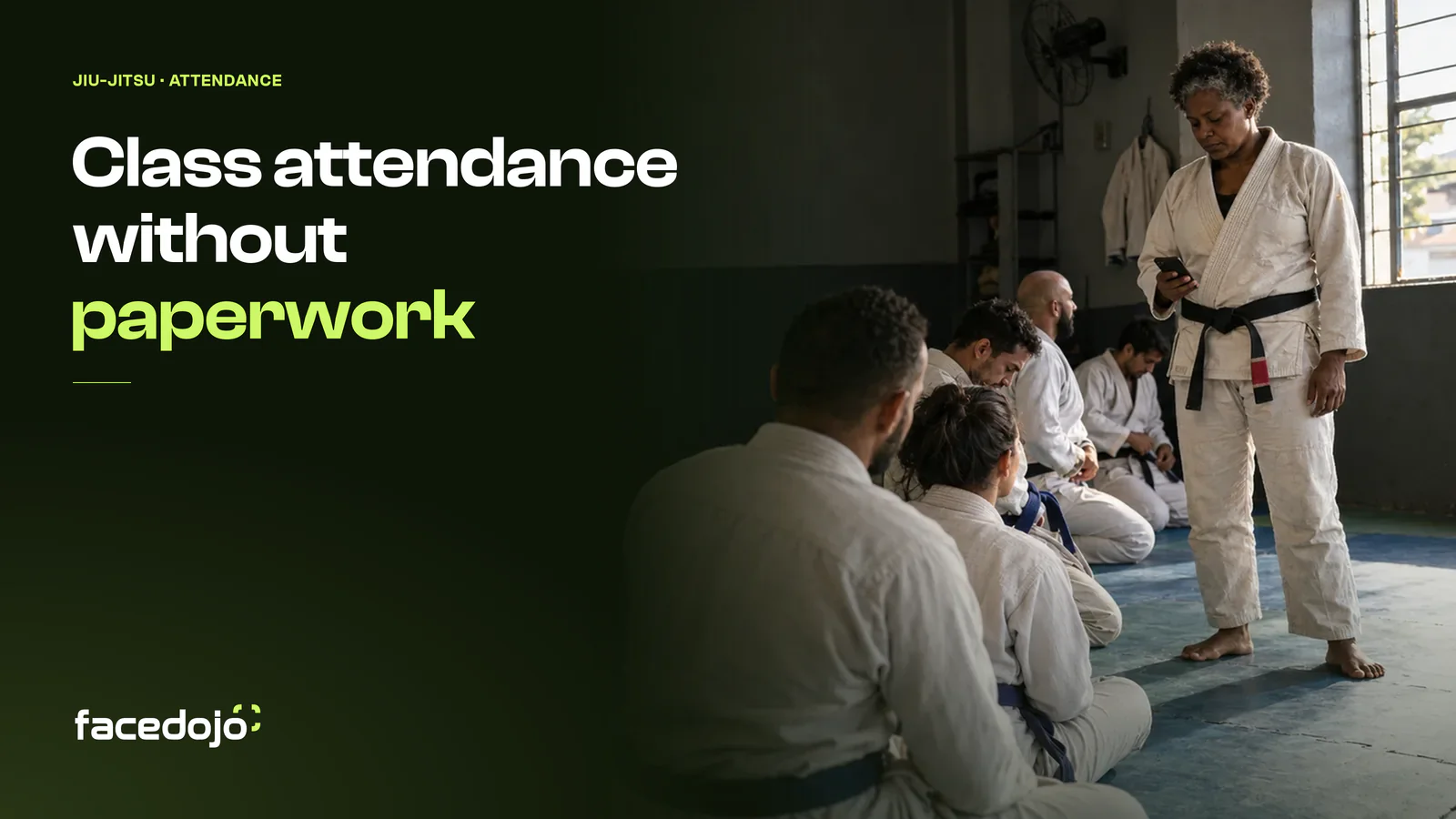
In FaceDojo, the instructor takes a class photo and sends it to FaceDojo’s WhatsApp number. FaceDojo recognizes registered students and records their attendance. Someone who left before the photo, or whose face was hidden, may need a manual attendance entry.
The paperless attendance workflow explains how to handle those exceptions. Once the class is checked, look for attendance at another time and any earlier message about a break. This helps avoid telling a student they have been absent when they trained that morning.
Name the person responsible for resolving unclear records. Without that ownership, one staff member may contact the student while another is still investigating the same class.
What can the team review each week?
Choose a review time that fits the class schedule and the team’s capacity to have useful conversations. Start with open agreements from the previous review, then work through newly identified changes in attendance.
| Situation | First check | Next action |
|---|---|---|
| No recent attendance | Was roll call completed? Did the student train at another time? | Confirm the record |
| A change from the usual routine | Is there a planned break or schedule change? | Ask the student what has changed |
| Student wants to return | What is making attendance difficult? | Agree a workable class or next step |
| Return already agreed | Are the class and instructor confirmed? | Check attendance after that session |
| No reply | Has someone else already made contact? | Agree who will follow up and when |
| Student confirms departure | Did they choose to explain the reason? | Record their answer and handle the requested next step |
Keep a brief handover between shifts: who spoke, what the student said and what was agreed. The next person should be able to continue the conversation without asking the student to start again.
What should you say to someone who has stopped coming?
Begin with an observation you have checked and an open question. For example: “Hi, we missed you at your usual classes. How are you doing? Is anything making it difficult to get to training?” Adjust the wording to your relationship with the student.
Listen before suggesting a solution. A discount will not fix a work schedule that clashes with class. More class times may not address a concern about fitting in with the group. Let the student’s answer determine which options you discuss.
Make the contact individually. A class group is useful for shared announcements, but personal attendance and membership questions belong in a private conversation. For children’s classes, speak with the parent or guardian who manages attendance.
Confirm what you understood: “So evenings are difficult while your shifts are changing?” If the student does not want to explain more, respect that limit. You can still answer practical questions without collecting unnecessary personal details.
How do you turn the conversation into a return plan?
If the student wants to return, agree something specific that the school can deliver. Confirm a suitable class, the date they intend to attend and the instructor who will welcome them. Share the relevant context with that instructor.
For a schedule problem, review the available class times. For uncertainty about the class, arrange a conversation with the instructor. For a planned break, agree an appropriate time to check in again. Keep the next step tied to what the student actually requested.
After the agreed session, check attendance. A positive reply and an attended class are separate outcomes. If the student did not come, first confirm that the record is complete, then use the previous conversation to decide whether another message would help.
When they do return, follow the next classes as well. Ask whether the new arrangement works and make sure the instructor knows about any agreed change. That closes the loop between the conversation and the student’s experience on the mats.
What needs a closer look after a student’s first classes?
For a new member, establish what routine they intended to follow. Confirm the recommended class and how often they expected to attend, then use the actual attendance record to prepare the first check-in. Avoid assuming that every new student starts with the same schedule.
Ask about the steps between enrollment and the mat. Did they know which class to join? Could they find the entrance and speak with the instructor? Was the agreed time workable? These questions can reveal a practical obstacle that a general “How is training?” message leaves unexplored.
Give any action a named owner. If the student needs a different class, have one person confirm the option and tell the receiving instructor. If they need an answer about the training itself, route the question to the instructor who can respond. Record the agreement so the front desk can support it.
On the next review, check whether the agreed class was attended and whether another conversation is needed. This uses the same attendance-and-contact routine as later retention work, with extra attention to the arrangements a new member is still learning.
How should you separate retention from membership billing?
Check attendance and payment status separately. A member may still be paying while missing classes, or may attend while a payment needs attention. Each situation calls for its own conversation.
When someone leaves, record the reason they supplied. A move to another neighborhood and difficulty finding a suitable class point to different operational questions. If they did not give a reason, leave it unreported instead of filling the gap with a guess.
At the monthly review, distinguish completed contacts, agreed returns, actual attendance after contact and confirmed departures. Use the relevant record for each: the conversation for an agreement, the class register for attendance. This shows the team which next steps remain open.
Where does FaceDojo fit into this routine?
FaceDojo’s martial arts school software connects photo attendance with student history and absence alerts. With a month of attendance history, alerts help flag students who are missing more classes than usual. Staff can then inspect the record and prepare an individual conversation.
During a trial, follow one class through attendance, history review and a staff handover. Check whether the instructor and front desk can find the same context. Discuss the plans and billing periods alongside the software cost checklist, using the work your team completed as the basis for the decision.
Frequently asked questions
Does one missed class mean a student is going to cancel?
No. Check the attendance record, other class times and any planned break before drawing a conclusion. Contact the student to understand a change in their usual routine.
What should I say to a student who has stopped training?
Send an individual message based on the attendance you checked. Ask how they are and whether anything is making training difficult. Listen before suggesting a different class or another next step.
Who should contact an absent student?
Choose one staff member who knows the student or can review the context. Instructors and front-desk staff should agree who owns the conversation to avoid duplicate messages.
How does FaceDojo support student retention work?
FaceDojo records recognized students from a class photo sent to its WhatsApp number, provides attendance history and sends absence alerts to the instructor's phone. Staff can review the record, prepare a personal conversation and check attendance after an agreed return.